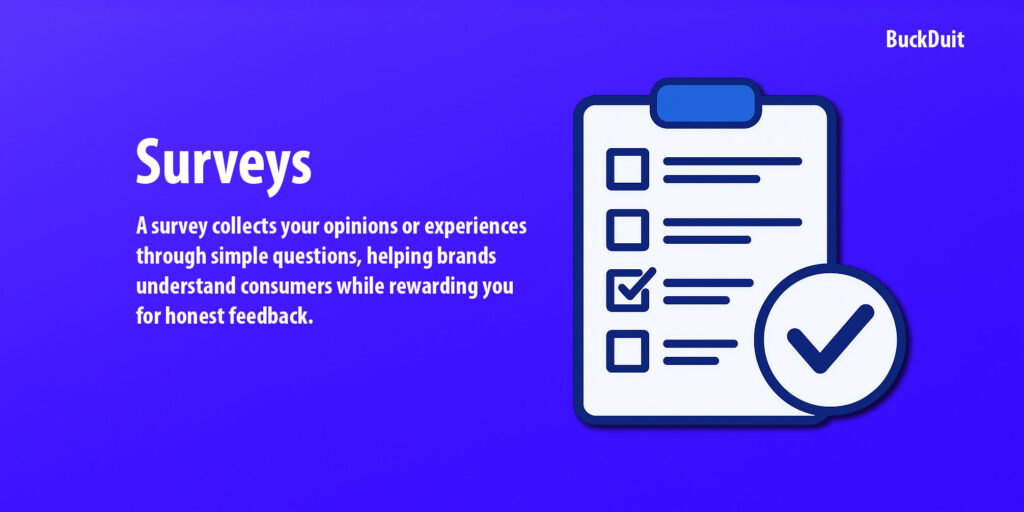
What Is Surveys?
Surveys are a reward-based system where users earn money, points, or vouchers by sharing opinions, feedback, or consumer insights through questionnaires. Companies use surveys to understand customer preferences, test products, improve services, and guide business decisions.
Instead of buying products, users “pay” with their time and opinions. Surveys are completed through websites or apps, and rewards are credited after responses are reviewed and approved. Payments may be made in cash, gift cards, or redeemable points depending on the platform.
Survey work does not require special skills, experience, or upfront investment. As long as users answer honestly and meet eligibility requirements, surveys can be completed from anywhere using a phone or computer.
While surveys are simple and low-risk, they are not high-paying. Earnings depend on survey availability, demographic fit, and completion time. Used responsibly, surveys offer a practical way to earn small, steady rewards during free time.
Why Surveys Matter Today
Surveys have become increasingly important in today’s digital economy because businesses rely heavily on data-driven decisions. Companies are willing to pay for real consumer feedback instead of relying solely on assumptions or advertising metrics.
As remote work, mobile apps, and digital platforms grow, surveys provide an accessible earning option for people who want flexibility without long-term commitment. Surveys fit easily into daily routines and can be completed during breaks, commuting time, or spare moments.
Unlike many side hustles, surveys do not require marketing, selling, or audience building. This makes them appealing to beginners, students, and users looking for low-effort ways to earn online without risk.
Why Do Companies Pay for Surveys?
1. Companies Pay for Consumer Insights
Surveys help companies understand customer needs, preferences, and pain points before launching or improving products.
2. Companies Pay to Reduce Business Risk
Collecting feedback early helps companies avoid costly mistakes by validating ideas before investing heavily.

Companies Pay for Consumer Insights

Companies Pay to Reduce Business Risk
3. Companies Pay for Market Research Data
Survey responses provide structured data that guides pricing, branding, and marketing strategies.
4. Companies Pay to Measure Customer Satisfaction & Experience
Surveys allow companies to evaluate how customers feel after using a product or service. This feedback helps identify issues, improve user experience, and increase retention by addressing problems before customers leave.

Companies Pay for Market Research Data

Measure Customer Satisfaction & Experience
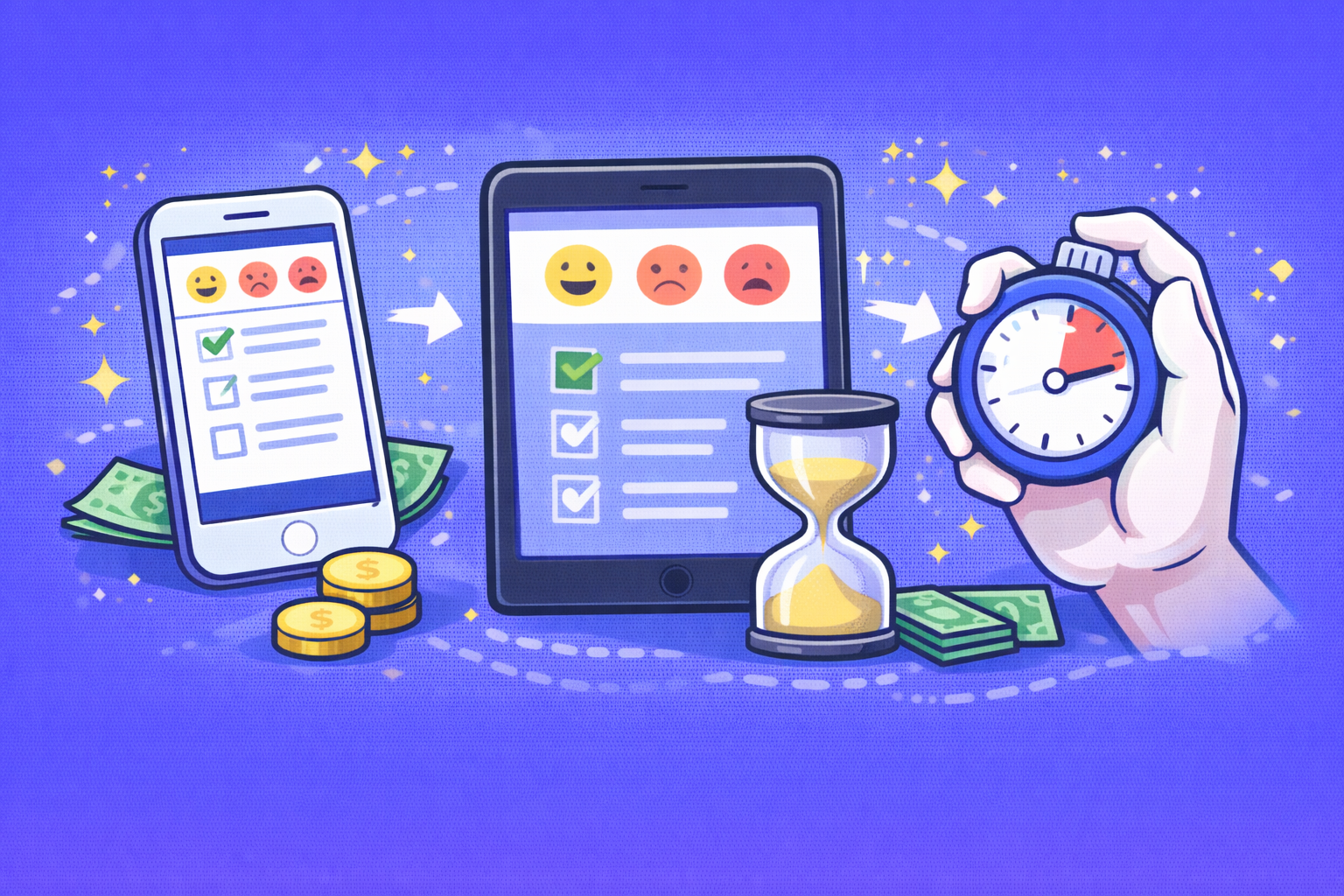
Types of Surveys
1. Short Opinion Surveys
Quick surveys that take a few minutes and pay small rewards.

2. Product Testing & Feedback Surveys
Users test products or services and share detailed feedback.

3. Brand & Market Research Surveys
Longer surveys focused on trends, habits, and preferences.

4. Academic & Research Surveys
Surveys conducted for educational or research purposes, often lower-paying but consistent.

5. User Experience (UX) & App Testing Surveys
These surveys focus on how users interact with websites, apps, or digital tools. Participants test usability, navigation, and features, helping companies improve design and functionality. Payments are usually higher than short surveys but require more attention.

6. Demographic & Lifestyle Profiling Surveys
These surveys collect long-term data about users’ demographics, habits, and lifestyles. While individual surveys may pay modestly, users who fit valuable profiles often receive frequent invitations and steady opportunities.
Earning Potential
Surveys are not a primary income source. They are designed to reward spare time, not replace a job or business.
Most users earn survey rewards as small but occasional income based on survey availability and eligibility.
Typical earning ranges:
Casual users: $5–$30 per month
Active users (multiple platforms): $30–$100 per month
Highly targeted users: Occasionally higher, but inconsistent
Survey earnings depend heavily on:
Your demographics (age, location, job, lifestyle)
Survey availability and qualification rates
Time spent vs payout per survey
Surveys work best when:
You complete them during free time
You join multiple legitimate platforms
You avoid low-paying or time-wasting surveys
Surveys should be treated as extra income, not income growth.
Who Surveys Is Good For
Surveys are ideal for people who want to earn small rewards from spare time without upfront costs or special skills.
Surveys fit people who prefer:
Simple, task-based activities
Flexible participation (no fixed schedule)
Low-risk, no-investment earning options
Best suited for:
Students & beginners
Easy entry, no experience required, flexible around studies or daily routines.People with spare time
Useful during breaks, commuting, or downtime at home.Budget-conscious users
Helps cover small expenses like mobile credit, food, or subscriptions.Users comfortable answering questions
Surveys require honesty, patience, and attention to detail.
Surveys work best for people who:
Have realistic expectations
Use multiple legitimate platforms
Treat surveys as extra income, not a goal
Surveys are most effective when used as a side activity, not a financial plan.

Students & beginners

People with spare time

Budget-conscious users

Users comfortable answering questions
Who Should Avoid Surveys
Surveys are not suitable for everyone, especially for those expecting fast, scalable, or reliable income.
Surveys should be avoided by people who:
Expect high or instant earnings
Want income that grows with effort or skill
Prefer long-term or scalable opportunities
Not ideal for:
People seeking full-time or replacement income
Survey earnings are limited by availability and eligibility. They cannot replace a salary or business income.Users who dislike repetitive tasks
Surveys often involve similar questions and screening steps, which can feel tedious over time.People with limited patience
Disqualifications, waiting periods, and low-paying surveys are common. Results are not immediate.Those uncomfortable sharing opinions or data
Surveys require honest responses and demographic information. Users who value strict privacy may find this uncomfortable.Anyone expecting guaranteed payouts
Survey availability depends on demand. Some days may have no suitable surveys at all.
Surveys work poorly for people who:
Want predictable monthly income
Dislike screening questions
Expect effort to directly scale earnings
Surveys are best avoided if your goal is income growth rather than small, flexible rewards.

People seeking full-time

Users who dislike repetitive tasks

People with limited patience

Those uncomfortable sharing opinions or data
Myth vs Reality: Surveys
Online surveys are often misunderstood. Many people approach them with unrealistic expectations, which leads to frustration and disappointment. Understanding the difference between myths and reality helps users decide whether surveys fit their goals.
Myth 1: Surveys can replace a full-time job
Reality: Surveys are not designed to replace employment or business income. Earnings are limited by availability, eligibility, and demand from companies. Even highly active users earn modest amounts that work best as side rewards, not salaries.
Myth 2: Anyone can earn the same amount
Reality: Survey availability depends heavily on demographics such as age, location, spending habits, and professional background. Some users receive frequent invitations, while others qualify for only a few surveys per month.
Myth 3: Every survey pays well
Reality: Most surveys pay small amounts, especially short opinion surveys. Higher-paying surveys exist, but they are less common and often require specific profiles or longer completion times.
Myth 4: Surveys are quick and effortless money
Reality: While surveys are simple, they require time, attention, and honesty. Users may face screening questions, disqualifications, or incomplete surveys without compensation. Patience is part of the process.
Myth 5: Surveys guarantee consistent income
Reality: Survey availability fluctuates. Some days may offer multiple surveys, while others may offer none. Earnings are inconsistent and should not be relied upon for fixed monthly income.
Myth 6: Surveys collect unnecessary personal data
Reality: Legitimate survey platforms collect data to match users with relevant research. However, users should choose trusted platforms and avoid surveys that request sensitive information unrelated to research purposes.
The real value of surveys
Surveys are best viewed as a low-risk, flexible way to earn small rewards during free time. They work well for students, casual users, and anyone looking to offset small expenses like mobile credit, food, or subscriptions.
When expectations are realistic, surveys can be useful. When expectations are inflated, they quickly feel disappointing. Understanding this balance is key to using surveys wisely.
Is Surveys Worth It Long-Term?
Surveys can be worth it long-term — but only if you understand their role and limitations clearly. Surveys are not a growth-based income model. They are a convenience-based reward system designed to compensate users for their opinions, time, and demographic data. When treated correctly, they provide value. When misunderstood, they lead to frustration.
In the long run, surveys work best as a supplemental income tool, not a financial strategy. Most users earn small but steady rewards by answering surveys during downtime — while commuting, waiting, or relaxing at home. Over months, these small payouts can offset everyday expenses like mobile credit, streaming subscriptions, or occasional food purchases. The benefit is consistency, not scale.
However, surveys do not compound. Your earnings do not increase significantly with experience, skill, or effort. Even highly active users face limits due to eligibility rules, demographic targeting, and fluctuating demand from companies. Some months may offer many surveys, while others may offer very few. This unpredictability makes surveys unsuitable for anyone seeking reliable or growing income.

Another long-term factor is time efficiency. While individual surveys may take only a few minutes, screening questions and disqualifications can add friction. Over time, users who dislike repetition or delayed rewards may lose motivation. Surveys reward patience more than productivity.
That said, surveys excel in low risk and low commitment. There is no upfront cost, no selling, no skill development, and no exposure to financial loss. For people who value simplicity and flexibility, this is a strong advantage. Surveys fit naturally into busy lives without requiring long-term planning or learning curves.
Surveys are most worth it long-term for:
Students and beginners
People with spare time but low risk tolerance
Users who want small rewards without pressure
Anyone aiming to reduce expenses rather than increase income
Surveys are not worth it long-term for:
People seeking financial independence
Anyone expecting income growth
Users who want predictable monthly earnings
In conclusion, surveys are worth it long-term only when used intentionally. They are a tool for small wins, not big outcomes. Treat them as a digital version of loose change — helpful, harmless, and limited — and they can fit well into a balanced earning ecosystem.
Scam Warning Signs (Surveys)
Online surveys can be legitimate, but the space is also crowded with scams that target beginners and people looking for easy money. Understanding the warning signs is essential to avoid wasting time, exposing personal data, or losing money.
One major red flag is any survey platform that asks for upfront payment. Legitimate survey companies pay users for feedback; they do not charge fees to join, unlock surveys, or withdraw earnings. Requests for “membership fees,” “activation charges,” or “verification payments” are strong indicators of a scam.
Another common warning sign is unrealistic income promises. Claims such as “Earn $500 a day answering surveys” or “Guaranteed income with no effort” are misleading. Real surveys pay small amounts per task and depend on eligibility and availability. Any platform promising high, fast, or guaranteed earnings is likely manipulating expectations.
Be cautious of excessive personal data requests. While legitimate surveys ask for basic demographic information, scams may request sensitive details such as ID numbers, banking credentials, or passwords. Survey platforms should never ask for login details to other services or confidential financial information.
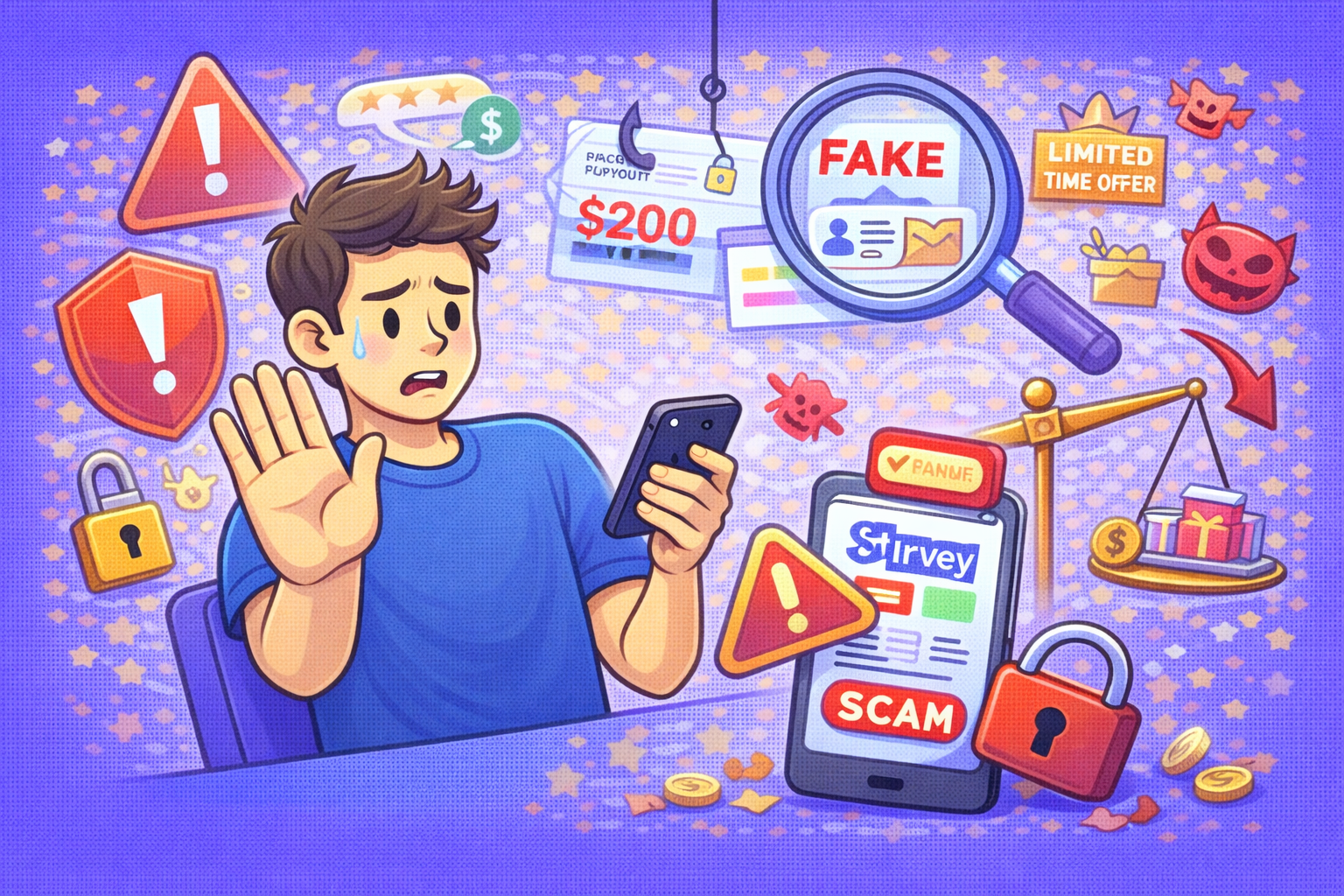
Poor transparency is another red flag. Scam platforms often lack clear company details, contact information, or privacy policies. Legitimate survey companies explain how data is used, how rewards are calculated, and how payouts work. If the rules are vague or constantly changing, that’s a warning sign.
Watch out for fake urgency tactics. Messages like “Limited-time offer,” “Only 5 slots left,” or constant countdowns are often used to pressure users into making rushed decisions. Genuine surveys do not rely on fear or urgency to attract participants.
Another sign is unpaid completed surveys. While disqualifications are normal, platforms that repeatedly reject submissions after completion or never credit rewards should be avoided. Consistent non-payment is a strong indicator of bad practices.
Finally, be careful with third-party redirects and pop-ups. Scam surveys often send users through multiple unrelated websites, ads, or downloads. This behavior increases the risk of malware, phishing, and data abuse.
In summary, legitimate surveys are transparent, free to join, modest in payouts, and respectful of user data. If a platform feels pushy, secretive, or too good to be true, it usually is. Staying cautious, using trusted platforms, and keeping expectations realistic are the best defenses against survey scams.
Final Thoughts (Surveys)
Surveys can be a useful online earning option — but only when they are understood and used correctly. They are not designed to replace a job, build wealth, or provide long-term income growth. Surveys exist to exchange consumer opinions and demographic data for small rewards, and their value lies in convenience rather than scale.
When used responsibly, surveys fit well into everyday life. They allow users to earn small amounts during spare moments without upfront costs, technical skills, or financial risk. For students, beginners, or people with flexible time, surveys can help cover minor expenses such as mobile credit, snacks, or subscriptions. The strength of surveys is their accessibility, not their earning power.
However, surveys have clear limitations. Earnings are unpredictable and depend heavily on eligibility, location, and demand from companies. Many users will experience disqualifications, low-paying offers, or periods with no available surveys at all. This unpredictability makes surveys unsuitable for anyone seeking stable or reliable income.
Another important consideration is time efficiency. While individual surveys may appear short, screening questions and rejected submissions can reduce the effective hourly rate. Over time, users who dislike repetitive tasks or delayed rewards may find surveys frustrating. Surveys reward patience and consistency, not speed or productivity.

Surveys also do not compound. Unlike skills, businesses, or investments, survey earnings do not grow significantly over time. Completing more surveys does not unlock higher earning tiers in a meaningful way. This makes surveys a poor choice for long-term financial growth but a reasonable option for short-term, low-effort rewards.
The most successful survey users are those with realistic expectations. They use multiple trusted platforms, avoid scams, focus on higher-quality surveys, and treat rewards as a bonus rather than a goal. They understand that surveys are a tool for small wins, not big outcomes.
In conclusion, surveys are worth using if you want flexibility, simplicity, and low risk. They are not worth relying on if your goal is financial independence, career development, or scalable income. When used as a supplement to other earning strategies, surveys can add value without pressure — but they should never be mistaken for a complete financial solution.
Freelancing & Digital Selling