Why Freelancing Matters Today
Freelancing has become one of the fastest-growing income models in the world. As job markets change, companies prefer hiring flexible, project-based workers instead of full-time staff. This shift creates massive opportunities for online earners — especially those who want control over their schedule, workload, and earning potential.
Unlike micro-earnings, where payouts are small and fixed, freelancing allows people to earn more by improving their skills, working with better clients, and building a portfolio. It’s not instant or effortless, but it’s one of the few online paths where your income can double or triple over time.
The freelancing engine is powered by businesses that constantly need content, design, development, research, marketing, editing, and countless other skills. Whether you’re a beginner or experienced, freelancing offers a practical way to build long-term income without traditional employment.
What Is Freelancing?
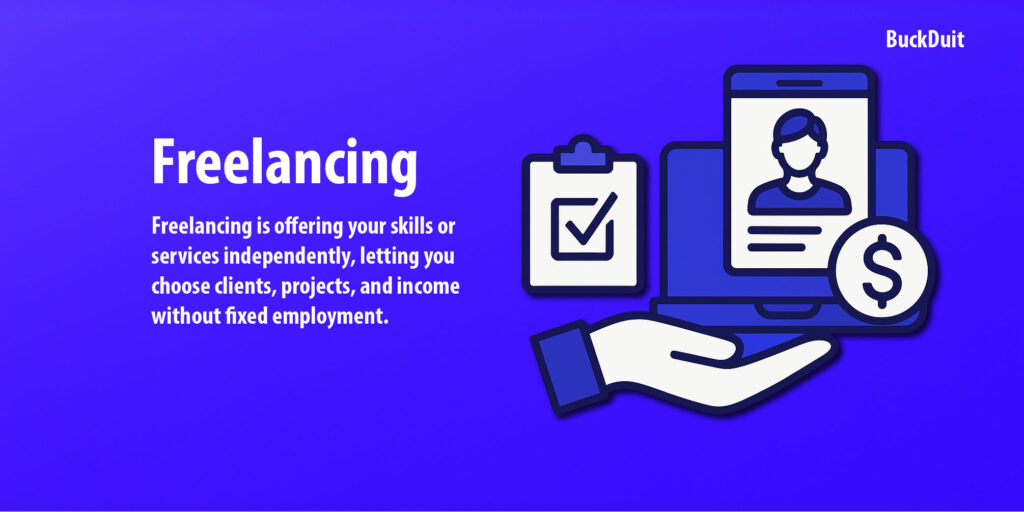
Freelancing is a modern way of working where individuals offer their skills, time, and expertise to clients on a project-by-project basis instead of being tied to a single employer. A freelancer is essentially an independent professional — someone who chooses what work to take, how much to charge, and when to deliver it. This freedom makes freelancing one of the most attractive income models in today’s digital economy.
Unlike traditional jobs with fixed schedules and salaries, freelancing gives you full control over your workload and earning potential. If you want to work more, you can take on extra projects. If you want to slow down, you can adjust your schedule. This flexibility is especially valuable for students, parents, part-timers, or anyone who wants income without sacrificing personal time.
Freelancing covers a wide range of skills, making it suitable for both beginners and experienced professionals. Popular categories include writing, graphic design, video editing, social media management, web development, virtual assistance, translation, and marketing. Beginners often start with simple tasks such as basic content writing, Canva design, or data entry. As they improve, they can move into higher-paying specialties like copywriting, SEO, UX/UI design, coding, or brand strategy.
One of the biggest advantages of freelancing is the potential to increase your income over time. Your earning power grows as your skills, portfolio, and reputation improve. Clients pay more for quality work, reliability, and specialized expertise — meaning your income is directly connected to the value you provide, not the hours you sit at a desk.
Freelancing also gives you access to global opportunities. With platforms like Upwork, Fiverr, Freelancer, Contra, and LinkedIn, you can work with clients from any country, often earning higher rates than local markets. This makes freelancing a powerful pathway for long-term financial growth, especially for people living in regions with limited local job options.
However, freelancing is not instant or effortless. It requires consistent learning, communication, time management, and the ability to deliver professional work. But for those willing to put in the effort, freelancing becomes more than a side income — it becomes a flexible, scalable, and future-proof career.
Why Do Clients Pay Freelancers?
1. Companies Pay for Speed & Flexibility
Businesses often need work done quickly: articles, graphics, bug fixes, campaigns, research, and more. Freelancers provide fast, on-demand delivery without long hiring processes, contracts, or delays. This saves companies time and reduces risk.
2. Companies Pay for Specialized Skills
Not every company has in-house designers, editors, marketers, or developers. Freelancers fill these gaps by offering expertise on demand. This lets companies access skills only when needed, making operations lean and efficient.
Advertisers Pay for Attention
Brands Pay for Consumer Insights
3. Companies Pay for Cost Efficiency
Hiring employees includes overhead: office space, salary, benefits, insurance, training. Freelancers cost less since they only get paid for specific work. This makes freelancing one of the most cost-effective resources for modern businesses.
4. Companies Pay for High-Quality Work
Freelancers compete with thousands of others — which means they deliver polished, competitive results to maintain ratings and attract future clients. Companies benefit from quality without long-term commitment.
Developers Pay for App Installs
Developers Pay for App Installs
Types of Freelancing
1. Writing & Content Creation
Writing includes blogs, product descriptions, website copy, SEO articles, social media captions, and editing. It’s one of the easiest skills to start with and can grow into high-paying niches like technical writing or brand storytelling.
2. Graphic Design
Designers create logos, banners, thumbnails, posters, infographics, and brand assets. With tools like Canva, beginners can start simple before upgrading to Photoshop or Illustrator for higher-paying projects.
Advertisers Pay for Attention
Brands Pay for Consumer Insights
3. Web & App Development
Developers build or improve websites, fix code, optimize performance, and even create custom applications. It’s one of the highest-paying freelancing fields with long-term client relationships.
4. Digital Marketing
Marketers manage social media pages, run ads, grow brand awareness, and improve SEO. This category has high demand because every business needs visibility.
Developers Pay for App Installs
Developers Pay for App Installs
5. Video & Audio Production
Editing videos, adding subtitles, cutting reels, mixing audio, and producing short-form content. With social media exploding, this skill category is becoming extremely valuable.
6. Virtual Assistance (VA)
Virtual assistants handle admin tasks, scheduling, emails, research, and data entry. It’s easy to start, suitable for beginners, and offers stable income with long-term clients.
Developers Pay for App Installs
Developers Pay for App Installs
7. Consulting & Expert Services
Professionals with strong knowledge can offer business advice, financial guidance, HR assistance, training sessions, or management support — often at very high rates.
Earning Potential
| Earner Type | Skill Level | Typical Pay | Monthly Range | Example Tasks |
|---|---|---|---|---|
| Beginner Freelancer | Basic skills, early portfolio | $5–$15/hr | $150–$500 | Simple writing, admin tasks, Canva design |
| Intermediate | Good portfolio, consistent delivery | $15–$40/hr | $500–$1,500 | Brand content, SEO writing, design packages |
| Skilled Professional | Strong expertise & experience | $40–$100/hr | $2,000–$6,000 | Full sites, complex editing, marketing strategy |
| Top Performer | Highly specialized expert | $100–$250/hr+ | $6,000+ | Advanced dev, consulting, high-end creative work |
Who Freelancing Is Good For
Freelancing are ideal for people who want simple, flexible ways to earn small daily income without pressure. They work best for students, stay-at-home parents, part-timers, beginners exploring online income, users with limited free time, and anyone who prefers no-risk, no-investment earning opportunities they can do anytime.

Students
Earn from writing, editing, or design while building skills that can become long-term careers. Flexible hours fit school schedules easily.

Stay-at-home parents
Freelancing allows earning from home without fixed hours. Perfect for parents who need to balance household responsibilities with online work.
Part-time workers
Anyone wanting extra income after work can take small projects. Over time, part-time freelancers often transition into full-time careers.
Beginners exploring online income
Freelancing is a natural upgrade after micro-earning. Skills grow with practice, and your rates improve as your work improves.
People with low free time
You can complete freelance tasks in short blocks of time — 30 minutes of writing, 1 hour of design, quick editing jobs, etc.
People who want no-risk earning
Freelancing is one of the best ways to build a sustainable, future-proof career without relying on traditional jobs.
Who Should Avoid Freelancing
1. People Wanting Fast or Instant Income
Freelancing does not deliver same-day results. You must develop your skills, build your portfolio, learn how to communicate with clients, and handle multiple revisions before earning consistently. If you need urgent money, micro-earning or part-time work is more suitable.
2. People Expecting Passive Income
Freelancing requires active effort. You earn only when you are working — writing, coding, designing, editing, or managing clients. This is not a set-and-forget income stream, and it won’t pay you while you sleep unless you develop advanced systems later.
3. People Who Dislike Feedback or Client Communication
Clients will ask for corrections, clarification, and improvements. If you dislike communication or feel offended by revisions, freelancing will be stressful and difficult.
You must develop your skills, build your portfolio
Freelancing requires active effort.
If you dislike communication or feel offended by revisions, freelancing will be stressful and difficult.
Beginners start modestly, upgrade skills, improve quality, and then raise rates.
4. People Who Expect High Rates Immediately
Income grows with skill, reliability, and experience. Beginners start modestly, upgrade skills, improve quality, and then raise rates. There is no shortcut to premium pricing.
5. People Who Don’t Want to Learn Tools or Skills
Freelancing is skill-based. You must learn the tools — Canva, WordPress, Photoshop, Figma, VS Code, SEO tools, or editing software. If you refuse to learn, freelancing stops working.
Myth vs Reality: Freelancing
Freelancing is one of the most misunderstood earning models in the online world. Many people enter this space with unrealistic expectations — thinking it will be quick, effortless, or instantly profitable. The truth is more practical. Freelancing rewards skill, consistency, and professionalism, not shortcuts or luck. Below is a clearer breakdown of the most common myths and the real facts behind them.
❌ Myth: “Freelancing is easy money.”
✔ Reality: Freelancing requires discipline, communication, and real skill. You are paid according to the quality you deliver, not the time you spend online. Successful freelancers plan, research, revise, and improve constantly. It is rewarding, but it is not effortless. The higher your skill level, the more income you can create — but it takes time to reach that level.
❌ Myth: “Clients will come automatically.”
✔ Reality: You must pitch, apply, network, and build a reputation before clients start coming to you. Beginners usually spend more time searching for projects, writing proposals, and building trust. Over time, strong portfolios attract repeat clients, and eventually, you may receive regular invitations or referrals — but it does not happen instantly.
❌ Myth: “Only top experts can freelance.”
✔ Reality: Many freelancers start as complete beginners with basic skills like writing, simple design, or virtual assistance. Through practice and consistency, they upgrade into higher-paying categories such as copywriting, advanced editing, SEO, video editing, or web development. Skills grow with effort — not with certificates.
❌ Myth: “Freelancing guarantees high income.”
✔ Reality: Income depends on skill level, work ethic, communication, niche demand, and your ability to deliver on time. Some freelancers earn part-time income, while others build full-time careers earning thousands per month. High income is possible, but not automatic. You must learn how to negotiate, manage clients, and improve your craft.
❌ Myth: “Freelancing is unstable.”
✔ Reality: Freelancers with strong portfolios, good communication, and consistent delivery often earn more than traditional jobs — and with greater flexibility. Stability comes from having multiple clients, recurring projects, and marketable skills. In fact, freelancing can be more secure than a single employer because your income doesn’t depend on just one source.
Is Freelancing Worth It Long-Term?
Freelancing can absolutely be worth it long-term — but only if you understand what it really offers and approach it with the right mindset. Many people enter freelancing hoping for fast income or easy rewards, but the real strength of freelancing comes from skill growth, reputation, and consistent improvement over time. It’s not designed to make you rich in your first week, but it can transform your income and flexibility over months or years.
One of the biggest long-term advantages of freelancing is that your earning potential increases as your skills develop. The more projects you complete, the more confident you become, and the more valuable your work becomes. Unlike micro-earning, where payments remain small and predictable, freelancing allows you to raise your rates, specialize in high-value niches, and attract clients willing to pay more for expertise. This makes freelancing a scalable career path, not just a temporary side hustle.
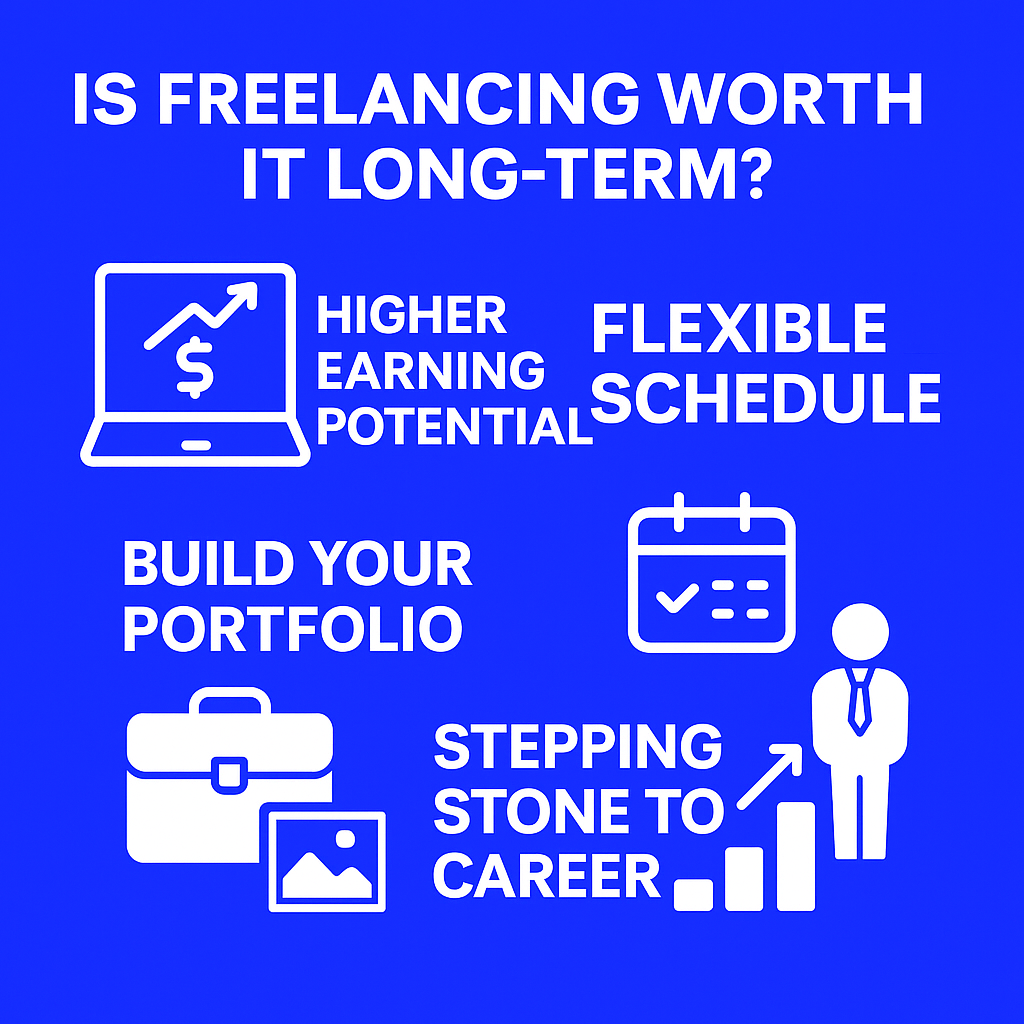
Freelancing also gives you full control over your schedule and lifestyle. You choose the projects you accept, the number of hours you want to work, and the industries you want to serve. Over time, this flexibility becomes a major advantage — especially for people who want to balance income with family, studies, or personal goals. Many freelancers eventually move into stable, recurring work with long-term clients, turning freelancing into a reliable monthly income.
Another long-term benefit is the professional portfolio you build. Every project becomes proof of your ability, helping you secure bigger and better opportunities. This portfolio can open doors to remote jobs, agency partnerships, consulting roles, or even your own business. Freelancing is often a stepping stone to higher-level digital careers.
However, freelancing requires patience and effort. It takes time to learn communication skills, handle clients, manage deadlines, and negotiate pricing. Income may fluctuate in the beginning, but with consistency, most freelancers experience steady growth and eventually earn more than they would in many traditional jobs.
Freelancing will not replace your income overnight — but if you stay committed, improve your skills, and treat it like a real profession, it can create a flexible, stable, and rewarding financial future.
Tips to Increase Earnings
Increasing your freelancing income is not about luck — it’s about strategy, consistency, and knowing how to position yourself in the marketplace. Freelancers who grow quickly are the ones who focus on skill improvement, client relationships, and smart workflow habits. Below are highly effective methods to boost your earnings and build long-term stability.
One of the most powerful ways to increase income is by specializing. Instead of offering general services, choose a niche where you can develop deeper expertise. Clients pay more for specialists because they solve problems faster and deliver higher-quality results. For example, instead of being “a writer,” focus on being an SEO writer, a technical writer, or a brand copywriter. The same applies to design, marketing, or coding.


Another key strategy is building a strong portfolio. A polished portfolio shows clients what you can do before they even speak to you. Add your best work, explain the results you achieved, and present everything in a clean, professional layout. A strong portfolio can help you win higher-paying clients even if you’re new.
Communication also plays a major role in earning more. Respond quickly, ask clear questions, and give clients updates before they ask. Good communication reduces misunderstandings and increases client trust — which often leads to repeat work and referrals. Many freelancers earn more from returning clients than from new ones.
To grow your income consistently, work on raising your rates gradually. After completing several successful projects, increase your pricing to match your improved skill level. Clients respect freelancers who value their work, and higher-paying clients usually bring smoother, more professional experiences.
Using multiple platforms is another smart income strategy. Don’t rely on one site like Upwork or Fiverr. Create profiles on several platforms, including LinkedIn, Freelancer, and niche marketplaces. This expands your reach and increases your chances of receiving project invitations.
Finally, invest time into learning new tools and upgrading your skills. Better skills equal better earnings. Each new tool you master — whether it’s Canva, Figma, WordPress, Adobe apps, or AI tools — adds value to your services and lets you offer premium work at premium rates.
When you combine specialization, strong communication, a polished portfolio, upgraded skills, and smart pricing, your freelancing income can grow faster than you ever expected.
Scam Warning Signs
The online freelancing world offers real opportunities, but it also attracts scammers who prey on beginners, job-seekers, and anyone eager to earn quickly. These scams are becoming more sophisticated, using fake company profiles, edited payout screenshots, and convincing job descriptions to trick users. Understanding the red flags is the only way to protect your time, money, and personal information.
One of the biggest warning signs is any platform, client, or “employer” that asks for deposits before you can access tasks. Legit freelance platforms never require upfront payments to unlock projects, activate features, or “verify” your account. If you’re asked to pay before earning, it’s 100% a scam. Another major red flag is fake payout proof — scammers often show photoshopped earnings, heavily edited testimonials, or “users” with no verifiable history. When you cannot confirm real, consistent payout evidence, stay away.
Be cautious of unrealistic income promises such as “$50–$200 per day for simple work.” Real freelancing requires skill and effort. No legitimate client pays high income for extremely easy tasks like clicking, liking, or sending messages. Scammers use big numbers to lure desperate job-seekers into their trap.
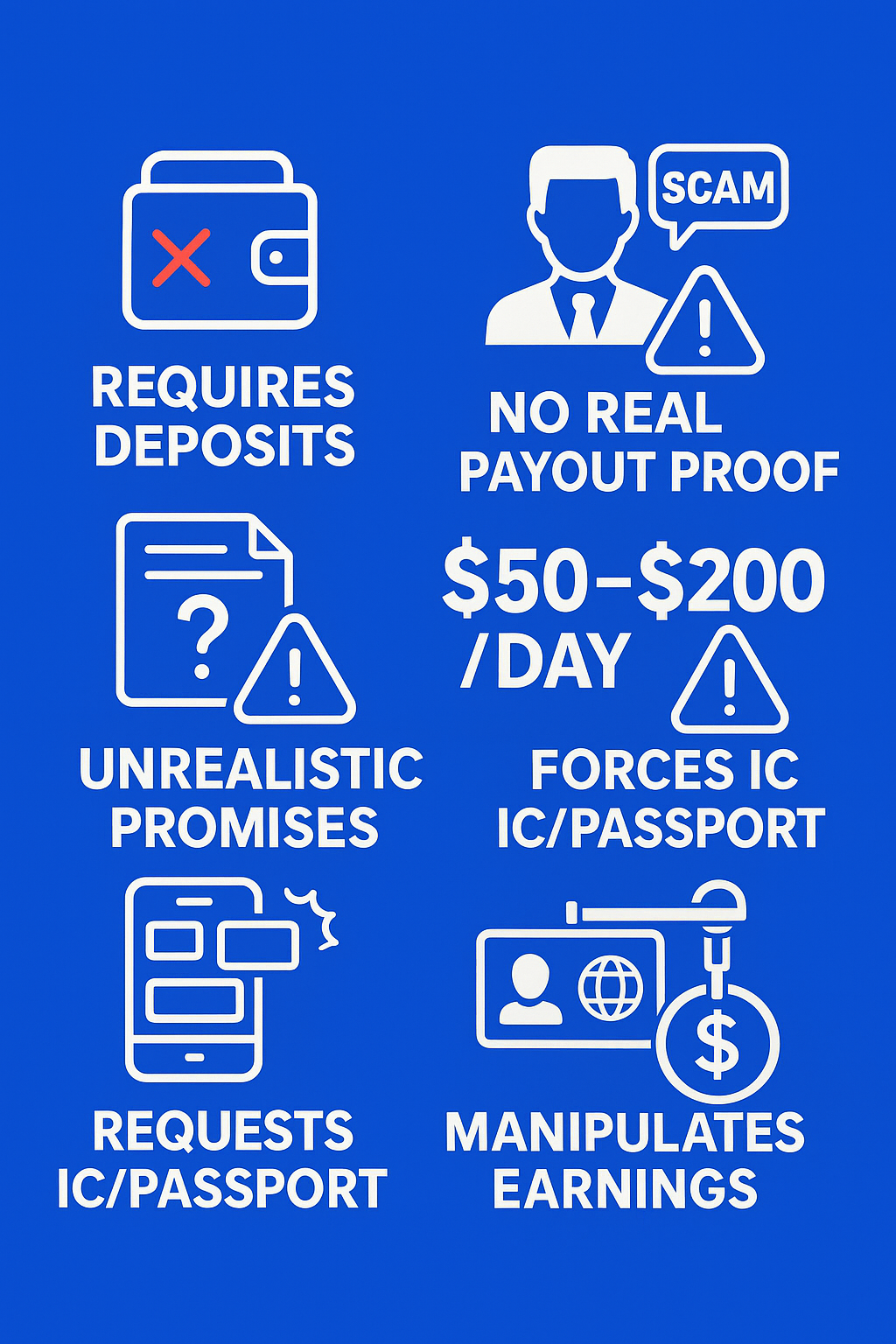
Never trust platforms that request sensitive personal documents like IC/passport photos, full addresses, or banking details before you are officially hired. Genuine companies only ask for documents after a formal contract or during tax-related onboarding — not during the first conversation. Many scammers also manipulate “pending earnings,” showing fake dashboards to make you believe you’re close to cashing out, only to block you later unless you pay a “processing fee.”
Another danger sign is extremely high task volume, especially when you see hundreds of tasks with unrealistic payouts but zero client transparency. Scammers rely on quantity to keep users busy so they don’t question the legitimacy. If someone pressures you to “complete more tasks quickly to unlock withdrawals,” it is designed to keep you trapped.
Avoid any job that uses celebrity photos, influencer endorsements, or vague business names. These tricks are used to create false trust. A real platform clearly shows its company registration, founders, support team, and public reviews across the web.
The rule is simple: If an app or client offers huge rewards for tiny effort, asks for money upfront, or hides its identity — it’s a scam. Protect your time and identity by sticking only to verified, transparent platforms.
Final Thoughts
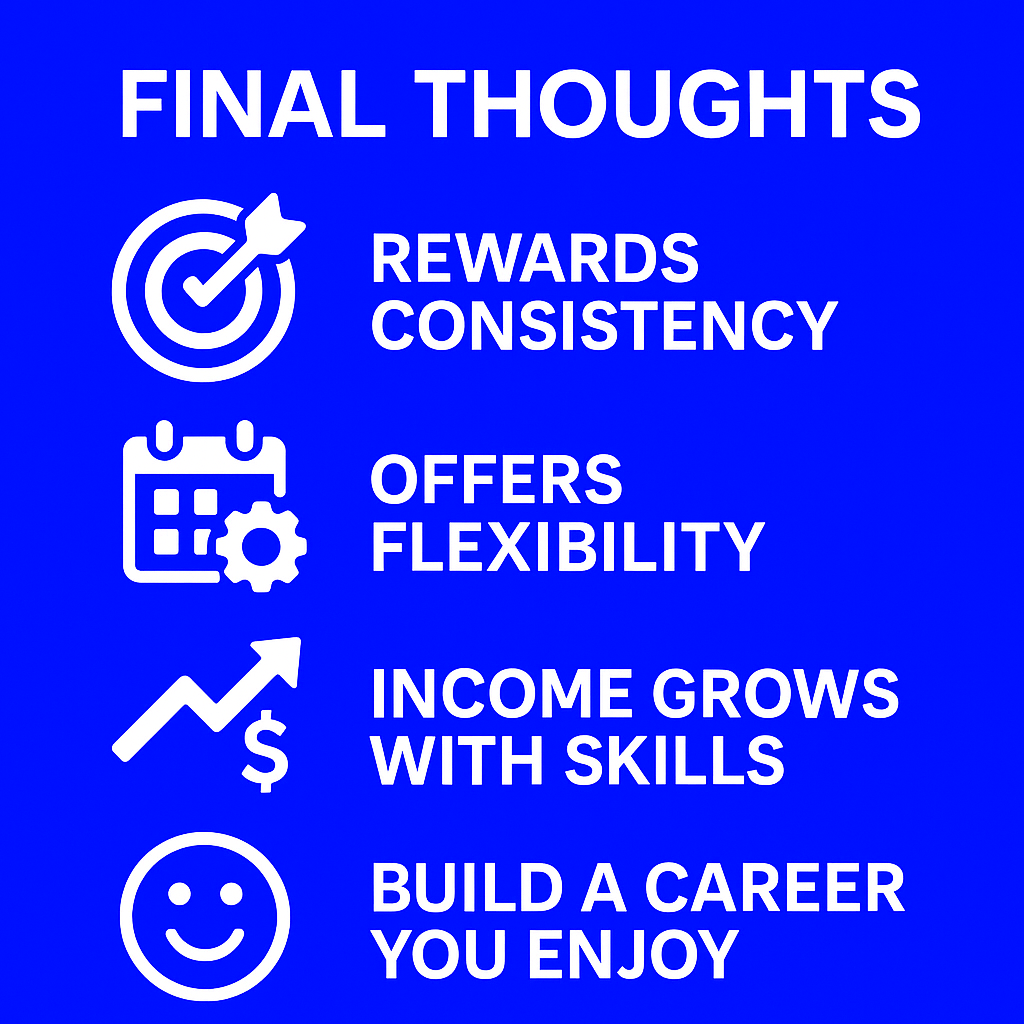
Freelancing has become one of the most practical and empowering ways to earn income online, especially for people who want more control over their schedule, environment, and long-term career direction. While freelancing is often promoted as an easy, instant path to success, the real value comes from treating it as a skill-based profession — something you build gradually, improve through experience, and strengthen with every project you complete. The truth is simple: freelancing rewards consistency, communication, and continuous learning far more than luck.
If you approach freelancing with the right expectations, it can become a foundation for long-term financial stability. You gain the freedom to choose clients, select projects that match your strengths, and shape a work routine that fits your lifestyle instead of being restricted by a fixed job structure. Over time, you also build a portfolio that becomes stronger and more persuasive, helping you attract better-paying opportunities and clients who value your contribution.
It’s important to understand that freelancing is not perfect — income can fluctuate, clients may vary, and you are responsible for managing your own time, productivity, and professional growth. But these challenges are also what make freelancing powerful. When you learn to manage them well, you become adaptable, self-reliant, and capable of earning more than many traditional jobs allow.
Freelancing is especially rewarding for those who enjoy skill-building. Every new tool, course, or technique you learn adds value to your service and opens new earning opportunities. Unlike typical employment, your income is not capped — it grows as your abilities grow. This creates a long-term advantage: the more you invest in yourself, the more your freelancing career pays back.
Most importantly, freelancing empowers you to build a lifestyle that matches your goals. Whether you want part-time income, a flexible side hustle, full-time freedom, or a pathway into remote work or digital entrepreneurship, freelancing can support that journey. Your progress may start small, but with discipline and a long-term mindset, you can create a sustainable, scalable, and deeply rewarding career.
With the right strategy — and BuckDuit’s guidance — you can avoid scams, choose real opportunities, and focus on work that truly pays for your skills, effort, and creativity.
Freelancing & Digital Selling